Massage therapy is a great way to relax and it supports so much more than we realize. Gut health is an increasingly popular topic as gastrointestinal and autoimmune conditions become more common. Can massage therapy improve your gut health? Let’s find out!
The Digestive System and Gut Health: What’s the difference and why are they both important?
Sometimes people use digestive health and gut health synonymously. While they are very similar and they work together, there are some distinctive differences when we talk about one versus the other.
The digestive system refers to the system as a whole and each individual organ that is involved in digesting our food. The digestive system consists of:
- Mouth
- Esophagus
- Stomach
- Small intestine
- Large intestine (including the colon and rectum)
- Anus
- Salivary glands
- Liver
- Gallbladder
- Pancreas
Gut health refers to one portion of the digestive system — the gut microbiome. The gut microbiome lives in the large intestine (the colon). This is where your gut bacteria and other microorganisms live and help ferment fibrous and carbohydrate-dense foods from which our body would otherwise have difficulty extracting nutrients.
They’re both important because without the initial portions of our digestive system our gut microbes would have too big of a job to do. If our bodies didn’t have the gut microbes we wouldn’t be able to access many of the necessary nutrients that our foods can offer us.
If we have an issue with either of these areas, our body gets thrown off. Sometimes it’s a minor inconvenience while other times it can significantly decrease the quality of life.
Because the gut microbiome unlocks many necessary nutrients, it’s the major focus of medical studies. Depending on the foods we eat they can bring us back to a healthy state OR throw us into a state of disease.
How to Know if You Need Help with Your Digestive and Gut Health
Many of us don’t really know the signs or symptoms to look out for to tell if we are experiencing issues with our digestive health. So let’s look at some symptoms that can let us know that there might be (even a small) issue that should be taken care of.
Frequency
On average doctors suggest your frequency should be 3 times per day to 3 times per week. Anything outside of these numbers could be concerning. If you’re having bowel movements more than 3 times per day you can experience malnourishment. If food doesn’t spend enough time in your digestive tract, your body doesn’t have enough time to absorb the nutrients from what you’ve eaten. This is often shown by runny stool – AKA diarrhea. Too frequent bowel movements has been linked to an increased risk of diverticulitis.
If you’re going less than 3 times per week you are likely dealing with constipation. When food moves too slowly through the digestive tract, it can lead to a buildup of pathogenic bacteria or cause other health problems. Not frequent enough bowel movements have been linked to decreased cognitive function and rectal cancer.
If you’re a Big Bang Theory fan, Sheldon is actually a good example of bathroom habits for frequency. He has a predictable schedule and routine for when he uses the bathroom. Our bodies should truthfully be on a pretty predictable routine like this. It doesn’t need to be down to the exact minute the way Sheldon is, but it should be pretty consistent that you’d be able to work a routine around it.
Consistency
I know this is gross and nobody wants to talk about it but bear with me. It’s important information and hiding from it because it’s gross isn’t going to help anyone. And the consistency of your bowel movements is actually more important than your frequency. It’s much more telling of whether your digestive system is normal or not.
The ideal consistency of your poop should be like soft ice cream. Any harder and it’s a sign of constipation. Any runnier (I know it’s gross I’m sorry but just listen!) and it’s considered diarrhea.

The Bristol Stool Form Scale (BSFS) is the easiest-to-follow breakdown of stool consistency. It’s often what doctors will use to determine if your stool is a normal consistency or not.
If you’re constantly having too hard or too soft of bowel movements you might want to bring it up to your doctor. Or if you swap between the 2 types often this can be a concern as well – here’s looking at you IBS-M.
Even if the consistency and frequency are not affecting your everyday life, they could affect your health in the long run.
Changes in bowel habits
If you normally poop once a day and it’s always the same consistency you’re fine and you know what normal is for you. However, if your bowel habits change, this could be a concern and should definitely be brought up to your doctor.
Color
Most color is going to be determined by what you’re eating. The concerns come into play when you have:
- Dark or black stool (indicating there could be a bleeding issue)
- Reddish or bloody stool (the reddish hue can come from foods with a lot of red dye or from foods like red beets too — keep this in mind)
- White mucousy stool
Why it’s important to look at your poop
Noticing these signs and changes is important to your health. Changes in bathroom habits or not having the most healthy bathroom habits can determine lifelong health or disease. Digestion can be affected by:
- Diet
- Stress levels
- Exercise and having an active lifestyle vs a sedentary lifestyle
- Water intake
- Disease and infections
- Medication use
If any of these changes happen they can affect your bowel movements. But if you don’t change anything and your stool changes, this can indicate that you may have disease in your digestive system or elsewhere in your body.
How can massage help digestive health?
As you may have noticed above, stress is a major factor in your digestive health.
General massage helps to calm your nervous system and that directly affects your stress levels and therefore your digestive health. It specifically works with your parasympathetic nervous system to reduce cortisol levels allowing the body to relax. During this time your body knows it can shift its attention from being active to working on its passive jobs like digesting your food.
Abdominal massage helps with digestive issues by focusing the brain on your digestive system. When an area of your body is touched it brings the brain’s focus to the area so it can assess if any help is needed there. This allows the abdominal muscles to relax which in and of itself can promote digestion.
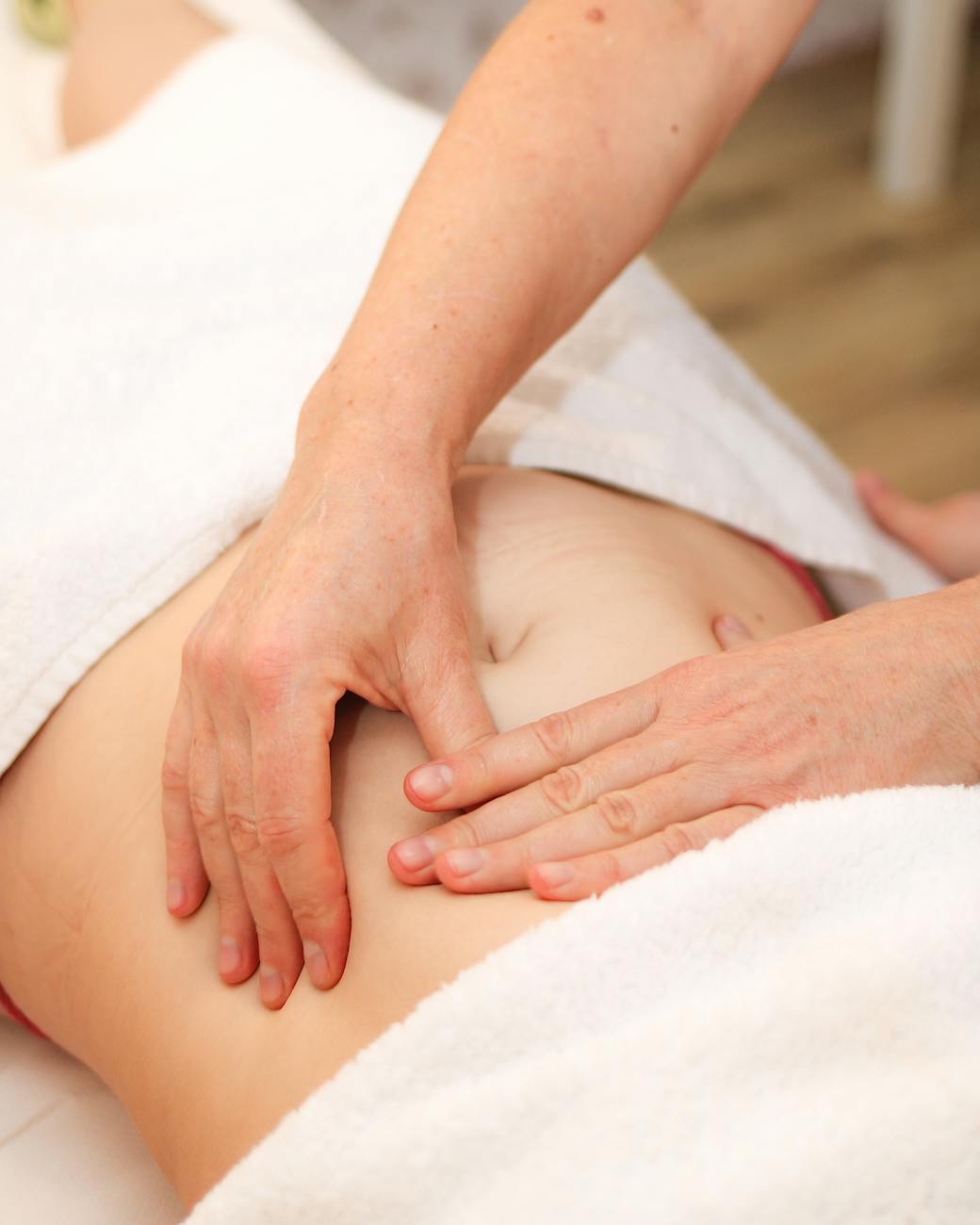
I’ve had clients who absolutely love abdominal massage and they didn’t want to have a massage without it. I don’t often add it to a normal session because most people have other concerns that we want to address and may not have enough time to add it in. It’s also a more sensitive area of the body that most people are self-conscious about.
However, abdominal massage does have many benefits and if you’re someone who struggles with digestive issues, it might be something to talk about for your next session.
Your intestines use peristalsis to move your food along through them. Your small intestine (if you were to take it out and unwind it) can be between 10-16 feet long. That’s a lot of space that food needs to move through. The muscles in your digestive tract use wave-like contractions to push the food through to the large intestine. However, our body does this without us needing to tell it to contract.
Muscles are broken down into 3 categories:
- Skeletal (all of the muscles that move your skeleton)
- Cardiac (your heart)
- Smooth (those in the digestive tract that are used for peristalsis)
Skeletal muscles like your biceps or hamstrings need you to tell your brain that you want it to contract to move so it can take care of the action you want it to. The digestive tract does this on its own through peristalsis where your autonomic nervous system takes care of these signals. Smooth muscles are what take care of the wave-like contractions during peristalsis.
When you do or receive abdominal massage, it helps bring the brain’s awareness to this area and uses the same directional guidance that your intestines use. So abdominal massage just encourages what your body naturally does on its own which can help if you’ve been backed up for a while. Abdominal massage can help to stimulate this by:
- Bringing blood flow to the area
- Mimicing peristalsis
- Relaxing surrounding muscles.
A recent study has shown that abdominal massage can modulate the gut microbiota as well! This was really exciting information for me to find out. The study found that it not only improves the gut microbiome but also can help with type 2 diabetes mellitus (T2DM) based on the changes that occurred. During the study, general massage, abdominal massage, and a control group were tested.
The findings were that general massage and abdominal massage were both able to improve levels:
- FBG
- PBG
- HbAlc
Abdominal massage alone was able to improve the following more than general massage and the control treatments:
- TC
- LDL
- Increase helpful bacterial strains Bifidobacteria and Lactobacillus
- Decrease pathogenic bacterial strains Enterococcus and Enterobacter
This study alone shows how beneficial general and abdominal massages can be for not only the digestive system but everything it affects as well.
So with all of these great benefits you might be wondering if…
When should I NOT get an abdominal massage?
Abdominal massage is great for relieving constipation and improving general digestive wellness. However, it may not be for everyone.
Women who are pregnant should avoid abdominal massage as the pressure can be uncomfortable for the expecting mother and if too much pressure is used can be potentially harmful for the baby.
If you’re experiencing diarrhea or a stomach virus, you should also not receive abdominal massage. Since abdominal massage helps to encourage stool to move through the body it can make matters worse if you are already experiencing diarrhea.
Basic Abdominal Massage Routine
While getting an abdominal massage done by a professional and licensed massage therapist is the best way to get started, you can absolutely perform it on yourself. It’s quite easy to do and when done on a regular basis can help your digestive system thrive.
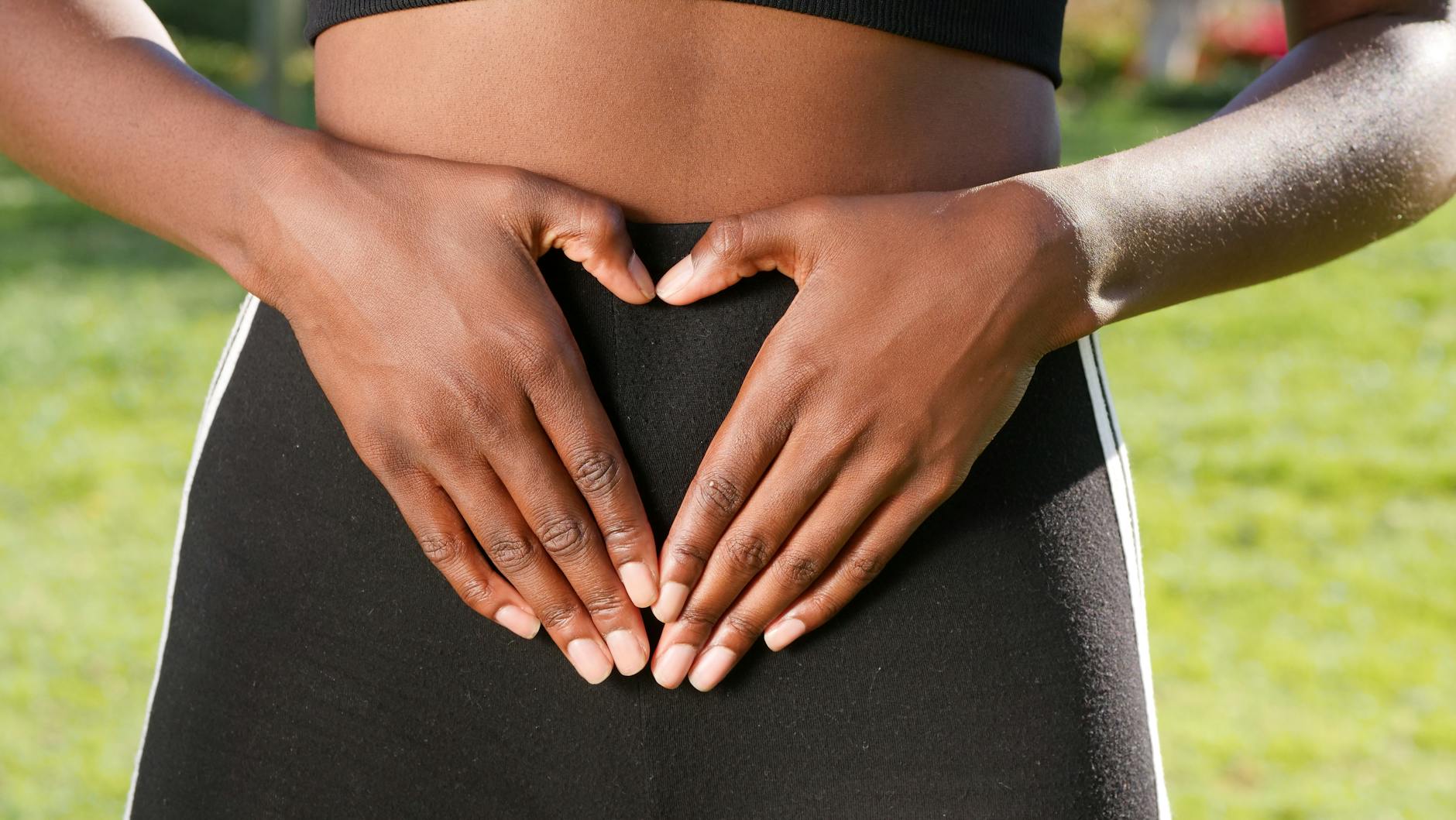
- Start by making clockwise circles on your stomach. Start with soft touch and then add increasing pressure. Do this about 5-10 times. (This should not hurt and if it does you’re either using too much pressure or you may have something wrong and should consult your doctor.)
- Next using moderate pressure drag two fingers down the left side of your stomach from the ribs to your pelvic bone. Do this 3-5 times.
- Move to the right side of your abdomen and drag your two fingers directly across the top of your stomach from one rib to the other and then moving down toward your pelvic bone again. Do this 3-5 times as well.
- Move to the right pelvic bone and drag two fingers up to your rib cage then across the top of your stomach and then down again to the other side of your pelvis. You should be making a blocky, upsidedown “U” shape. Do this 3-5 times as well.
- Start doing the clockwise circles again to close out the session. This time you’ll use deeper pressure to start and soften the pressure towards the end. This lets the body know that things will be resuming to normal soon.
You can modify this routine as you need by adding different techniques, but this is the best and most basic abdominal massage routine you can use on a daily basis.
If you’re looking to improve your digestive and microbial health, massage can be a great way to do that. To book a massage email me at crystal@wholeisticallyyou.com , call or text (570)401-6858 , or book online here. (Sometimes the booking website only shows Thursdays I’m still trying to fix this so if you need other availability reach out one of the other two ways).
____________________________________________________________
DISCLAIMER: This article is purely informational — see linked sources for studies where information has been found. None of the information here should be taken as medical guidance and you should consult with your primary care physician before making any changes to medications or adding in anything new to your routine.
Resources:
https://www.niddk.nih.gov/health-information/digestive-diseases/digestive-system-how-it-works
https://pmc.ncbi.nlm.nih.gov/articles/PMC4566439/
https://pmc.ncbi.nlm.nih.gov/articles/PMC8957846/
https://pmc.ncbi.nlm.nih.gov/articles/PMC10662989/
https://pmc.ncbi.nlm.nih.gov/articles/PMC7160378/
https://pediatricsurgery.stanford.edu/Conditions/BowelManagement/bristol-stool-form-scale.html
https://pmc.ncbi.nlm.nih.gov/articles/PMC7310914/#sec27
https://pmc.ncbi.nlm.nih.gov/articles/PMC9365616/
 Wholeistically You