You’ve heard of the cardiovascular, immune, and muscular systems. But you don’t hear quite as much about the lymphatic system. Let’s explore the lymphatic system and learn what it is, what it does, and why it matters.
What is the lymphatic system?
The lymphatic system is responsible for managing waste and fluid levels throughout the body. It’s often overlooked in healthcare practices unless there’s an obvious lymphatic issue like water retention in lymphedema or cancer.
The lymphatic system is a partially open system. This means that it can be closed off, or it can open up to release or absorb fluids and waste. They sometimes refer to it as a zipper because of this mechanism.
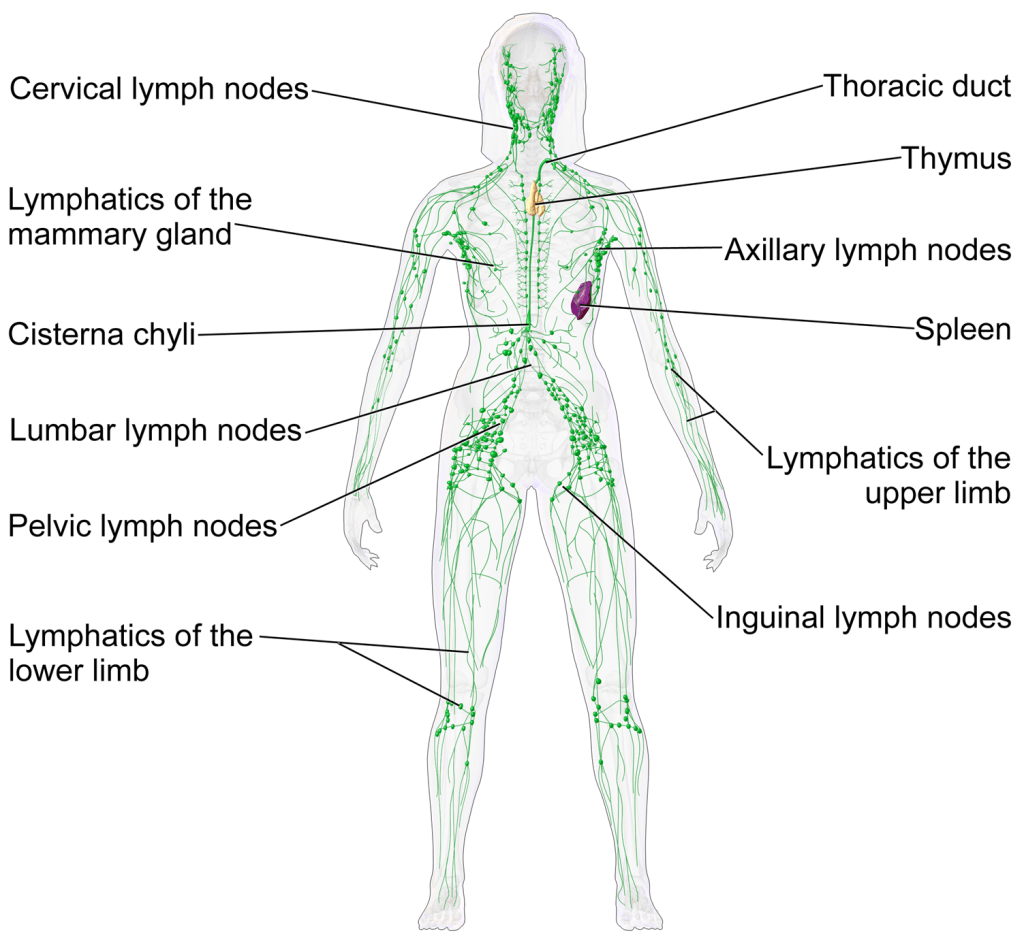
The lymphatic system consists of:
- Lymph fluid – a clear to milky fluid that should be relatively close to water in consistency. Lymph is comprised of interstitial fluid, proteins, and other nutrients. It comes from our blood plasma.
- Lymphatic cells – lymphocytes (B and T cells), macrophages, and dendritic cells
- Lymphatic vessels and capillaries
- Lymphatic organs – including lymph nodes, lymphatic vessels, thymus gland, spleen, tonsils, adenoids, bone marrow, gut-associated lymphatic tissues (GALT), cysterna chyli, and ducts
All of these structures help the lymphatic system to take care of its many important jobs.
What does the lymphatic system do?
Your lymphatic system, on its own, removes waste from your body and helps balance your fluids.
However, it helps the rest of your body systems to work more effectively, especially your immune system. Lymphocytes are sometimes called white blood cells, and if you remember, they have a major role in the immune response.
Think about a time that you’ve had an injury, maybe a twisted ankle. It puffs up pretty quickly, and this is a result of lymph coming to the area to stabilize the joint. The lymph also brings in the important B and T cells to let the immune system know that something is wrong and needs to be addressed.
The immune system comes in with other cells to help repair the injury. This process involves removing dead or damaged tissues and patching the area up. Now the lymph can carry the dead and damaged tissue away from the area, so you can get back to your normal activities.
This doesn’t just happen with injuries, though. Anytime your body experiences inflammation, this process happens. All diseases have an inflammatory aspect to them and therefore trigger the lymphatic system.
If your body is constantly inflamed for one reason or another, your lymphatic and immune systems get overworked and begin to work less effectively.
The lymphatic system also works with your circulatory system by transporting nutrients and removing waste. And your lymphatic system helps maintain your gut health with the GALT structures.
Why is the lymphatic system important?
The lymphatic system is important because it affects how well every other system works. If the lymphatic system starts to get backed up, your body gets more sluggish. This means recovery times are much slower for injuries and illnesses.
You’re also much more likely to get sick if your lymphatic system is slowed.
Think about a traffic jam on the highway. The main lanes get blocked up, so they begin sending the same number of cars through smaller passageways. It seriously slows down the flow of traffic, and all the streets get backed up. The same thing happens with your lymphatic vessels.
The vessels run throughout the body, collecting trash and bringing it to your lymph nodes. In the lymph nodes, they sort through what was brought to them: whatever is trash gets removed, and whatever is good gets recirculated to the lymph and blood.
But if you have a ton of trash being brought in, it takes so much longer to sort through. The vessels then get backed up, and the lymph fluid becomes thicker. It moves much slower through the vessels towards the nodes, and your whole body responds much slower to any attacks.
Symptoms of slowed lymphatic health include:
- Slowed recovery time with injuries and illnesses
- Getting sick easily
- Brain fog (easily forgetting things, unable to focus, difficulty concentrating or having clear thoughts)
- Feeling swollen or puffy in your face and neck
- Retaining water in your limbs
- Low energy levels
This can lead to other inflammatory conditions like obesity, leaky gut, and diabetes.
How can I improve my lymphatic system?
If you’re dealing with any of these issues, you’re probably wondering how you can improve your lymphatic system. First, it’s important to know what affects your lymphatic health:
- Diet – healthy diets provide your cells with antioxidants and nutrients for better function and less cellular damage. Unhealthy diets can damage your cells and add more inflammation to your body.
- Exercise – exercise and an active lifestyle help your lymph to move. Your circulatory system has the heart to pump blood through the vessels. But your lymphatic system only has muscular contraction to get the lymph moving. So the more active you are, the better your lymphatic system works.
- Hydration – the more hydrated you are, the thinner your lymph is. This is a good thing because it moves through the vessels more quickly and easily. When you’re dehydrated, the lymph gets thick and sludgy and takes longer to be processed.
- Medication use – our bodies don’t really know what to do with medications. They use whatever parts they recognize, but they tend to store up in our system, making our lymphatic system slower. Antibiotics damage the balance of healthy bacteria in our bodies, which contributes to inflammation.
- Drug or alcohol use – much like medications, these substances tax the lymphatic and immune systems by adding more of what your body can’t get rid of easily. Do your body a favor and skip these pro-inflammatory products.
- Stress – cortisol is released when your body is under stress. Cortisol increases inflammation throughout the body and slows your lymphatic flow. Figure out how to manage stress through self-care practices and limiting your exposure to unhealthy stressors.
- Negative emotions – negative emotions can cause cortisol release as well. In addition, they create physical holding patterns in your muscles that can create inflammation. Taking care of your emotions, rather than bottling them up, will significantly help your lymphatic flow.
- Diseases – every disease has inflammation. Certain diseases affect the lymphatic system directly, like lymphedema, cancer, and infections. Finding the root cause of your disease can help reduce the strain on your lymphatic and immune systems.
- Injuries – just like diseases, experience increased inflammation. Eat a healthy diet and listen to your body so that your injuries heal completely. This will help prevent arthritis and other inflammatory conditions in the future.
- Scar tissue – scar tissue damages your lymphatic structures. This can inhibit lymph flow and cause more backups. Have scar tissue taken care of through modalities like massage, lymphatic drainage, cupping, laser therapy, or microcurrent therapy (MPS).
So, looking at a list of some of the things that can impact how well (or not) your lymphatic system works, let’s look at ways you can improve your lymphatic system!
A diet that is full of healthy proteins, fats, and fiber is the best way to support your cells.
Exercise on a regular basis to help move the lymph. Exercises like walking, weight lifting, stretching, mobility exercises, and rebounding are all great for getting that lymph to move!
Dry brushing is great for lymphatic health because it gently stimulates the lymphatic system while removing dead skin cells. This allows the skin to remove any built-up waste via sweating through the freshly unblocked pores.
Vibration plates can help boost lymphatic flow by causing muscle contractions. The vibrations also stimulate lymph flow, and many vibration plates come with exercise bands that allow you to get your upper body flexing, too!
Essential oils like geranium, lavender, citrus oils, and eucalyptus have all been shown to help improve lymphatic health. My favorite blend is geranium, eucalyptus, and grapefruit!
Manual lymphatic drainage (MLD) is one of the best ways to support your lymphatic system. MLD helps guide the lymph to the nodes at a quicker pace. The gentle touch during these sessions helps stretch the skin to pump the lymph in the right direction. Your lymph moves 10 times faster than it normally does when you receive MLD, and when done on a regular basis, you’ll experience many great benefits. It’s been shown to improve conditions like glaucoma, dementia, and autoimmune disorders. MLD can also help with everyday issues like puffy eyes, period cramps, and frequent headaches.
If you’re looking for a manual lymphatic drainage therapist in NEPA, I can help! Text or call (570)401-6858 to set up your first appointment.
Resources:
https://www.cancer.gov/publications/dictionaries/cancer-terms/def/lymphatic-system
https://www.ncbi.nlm.nih.gov/books/NBK557833/
https://pmc.ncbi.nlm.nih.gov/articles/PMC4967732/
https://pmc.ncbi.nlm.nih.gov/articles/PMC4972108/
https://pmc.ncbi.nlm.nih.gov/articles/PMC10045879/
 Wholeistically You