Dry brushing is an ancient practice for exfoliation and related health benefits. Nowadays, dry brushing is found in spas but not as an everyday practice for most people. Let’s learn more about it to see if it’s what you need in your routine!
What is dry brushing?
Dry brushing is an exfoliation technique that uses a coarse bristled brush. It’s been used in Ayurvedic medicine for thousands of years.
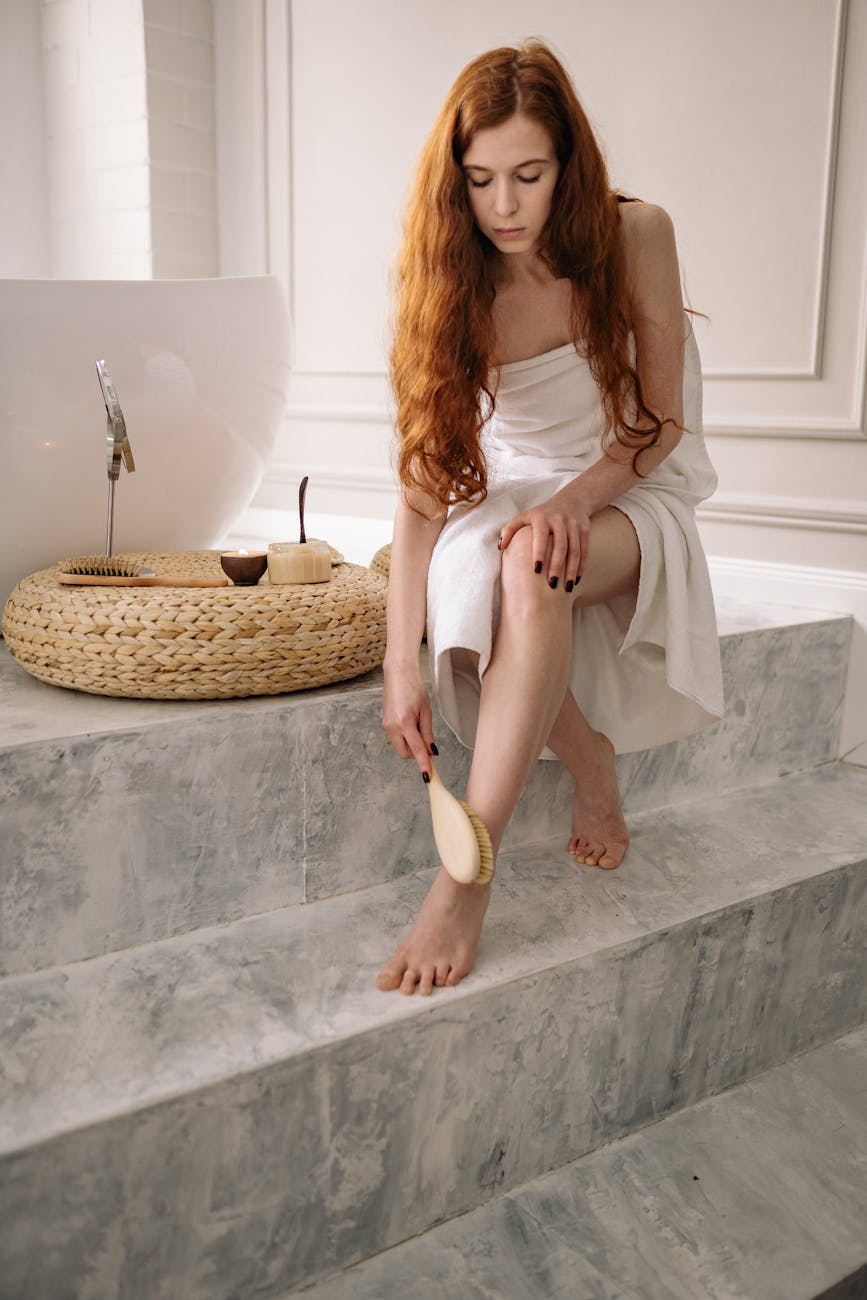
In Japan, it was used as a way of removing dead skin, oils, and dirt before bathing.
In Ancient Greece they used a similar technique where they would scrape their skin with a tool called a strigil. They did this after being in the arena to remove dead skin, dirt/mud, sweat, and other oils, and to stimulate their energy after fights.
Ancient Egyptians used dry brushing to improve their health and as a beauty-enhancing practice.
Most times dry brushing was used to help stimulate circulation, improve the appearance and health of skin, and keep the body healthy.
Benefits of Dry Brushing
Dry brushing is very similar to massage. So a lot of the benefits will be quite similar, like making you feel more relaxed and invigorated.
Dry brushing stimulates blood flow to the area you are working on. Since the strokes used with dry brushing work up the body towards the heart, people have claimed that it can improve heart and circulatory health. Unfortunately, the jury is still out on this as there hasn’t been much research to look into the benefits of dry brushing on heart health. However, the fact that it can bring bloodflow to an area does provide the body with benefits like:
- Help with tissue repair
- Removing dead or damaged cells
- Bringing more oxygen and nutrients to the area
Because it’s an exfoliation practice, it does remove dead skin cells. Dry brushing can also remove unnecessary oils and sweat from your skin which helps the health of your pores. This improves detoxification and gives your skin a glowing appearance.
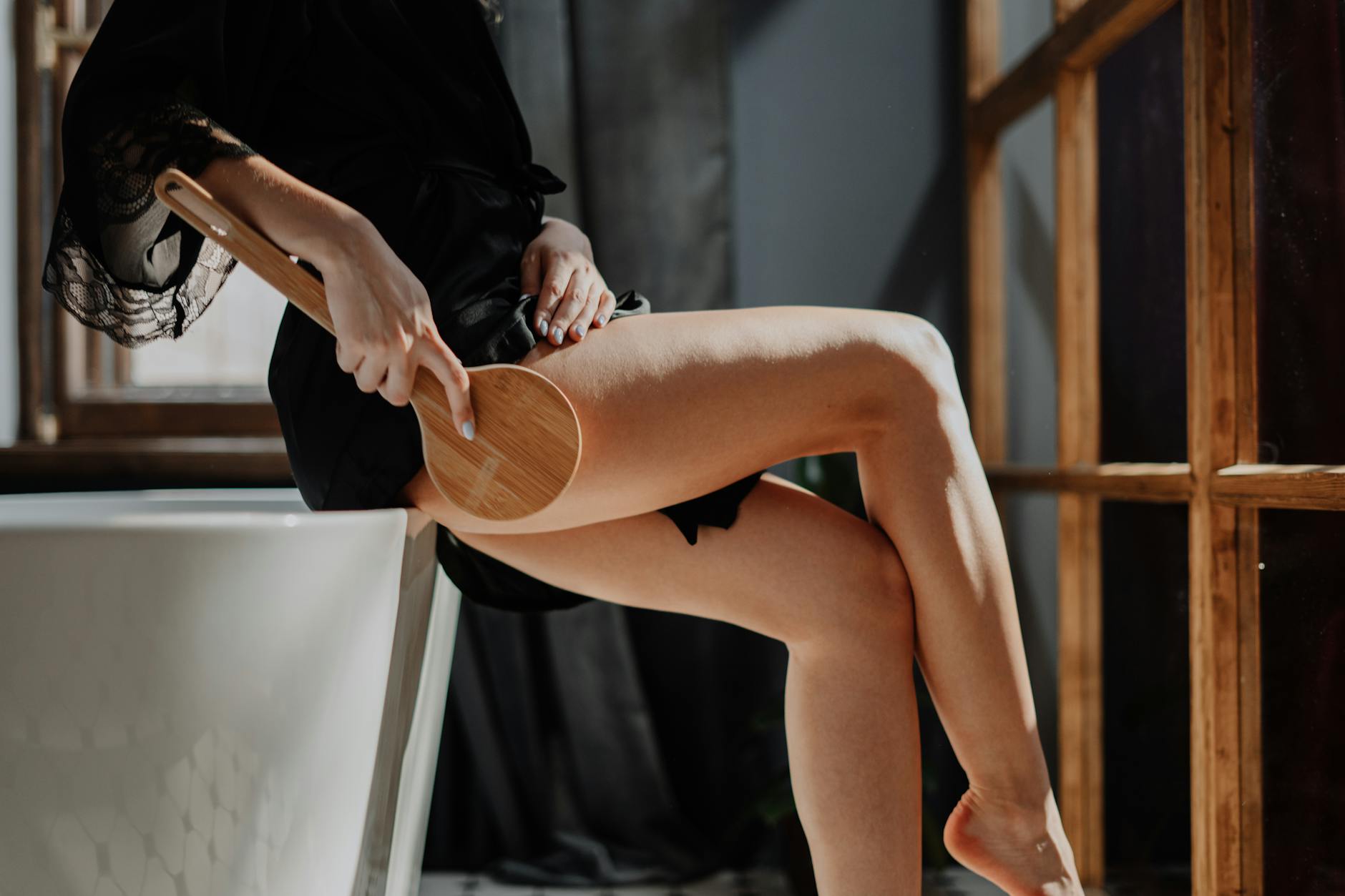
Some people report a reduction in the appearance of their cellulite when dry brushing. However, this hasn’t been proven in any scientific research. This might be because the increase of blood flow to the area makes the skin appear fuller, even with the increased cellular activity. There may or may not be evidence to prove it, but people do swear by it and it can’t hurt.
As for lymphatic drainage, this is the biggest claim people make for dry brushing. But this too, has yet to be supported by research. There hasn’t been much research done on this to make a claim one way or the other. But personally, when I dry brush I do notice my lymph nodes become less swollen and my face appears slimmer. The claims that it supports lymphatic drainage come from the fact that the pores are opened up, and dry brushing can promote sweating. This allows more toxins to be released through your skin so they aren’t blocking up your lymphatic system.
Risks of Dry Brushing
Dry brushing for the most part doesn’t have many risks. It’s a great way to support your health without many side effects. While it’s okay for the general population, there are some who should be cautious when dry brushing.
- Those with sensitive skin should use extremely light pressure to make sure they don’t irritate their skin.
- Those with skin conditions like psoriasis, eczema, or other rashes should avoid the inflamed area. When I have a flare-up of eczema, if I do gentle strokes above the inflamed area and use the brush to stretch the skin I find that it helps to reduce the flare-up.
- If you have an outbreak like hives, poison ivy (or similar things), or acne, you should avoid dry brushing until the breakout goes away.
- People with cellulitis or swelling in the limbs should avoid it unless directed by their health care provider.
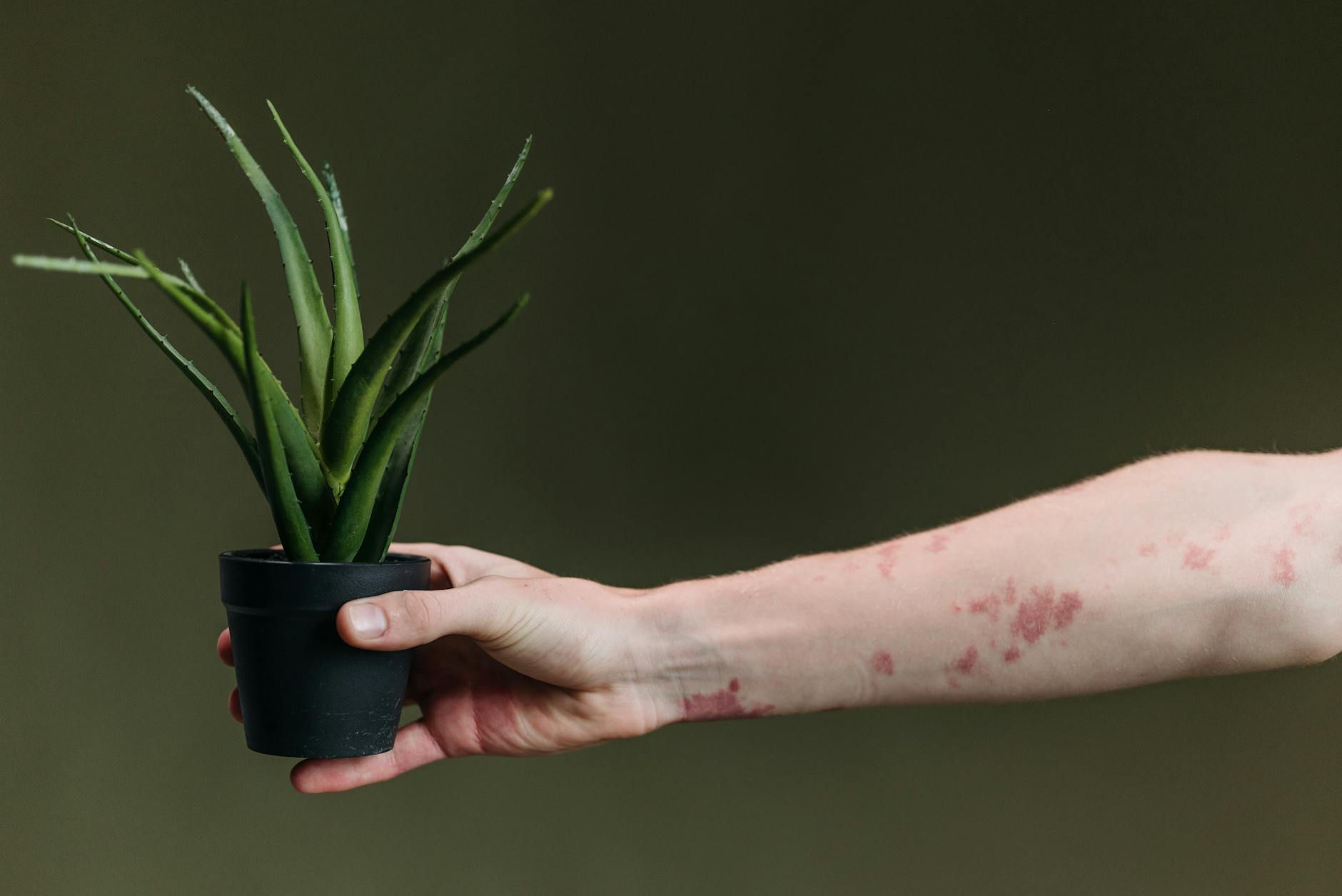
Dry brushing on a regular basis may be able to help these conditions by helping with local blood flow and potential lymphatic drainage.
How to Dry Brush
Dry brushing is pretty easy. First you’ll need to get a dry brush. When purchasing a dry brush keep the following in mind:
- Make sure the bristles are from a natural source (many times boars bristles are a great option)
- Consider the design of the dry brush (can you get hard to reach areas easily, will you be able to grip it correctly, etc.)
- Check the bristles to make sure they aren’t too soft or too hard
This is the dry brush I have. I love that it came as a set with a bag to hold everything. I think this one is great because it has the ability to add length or keep the brush on with a band. The small brush is nice too for exfoliating your heels. The soft gloves are great for exfoliating the delicate skin of your face. I don’t get any commission from sharing this product, I just really love it and think its a great starter set for anyone wanting to get into dry brushing. This is the set I gift my clients when they win my monthly raffle, if that is the gift of the month.
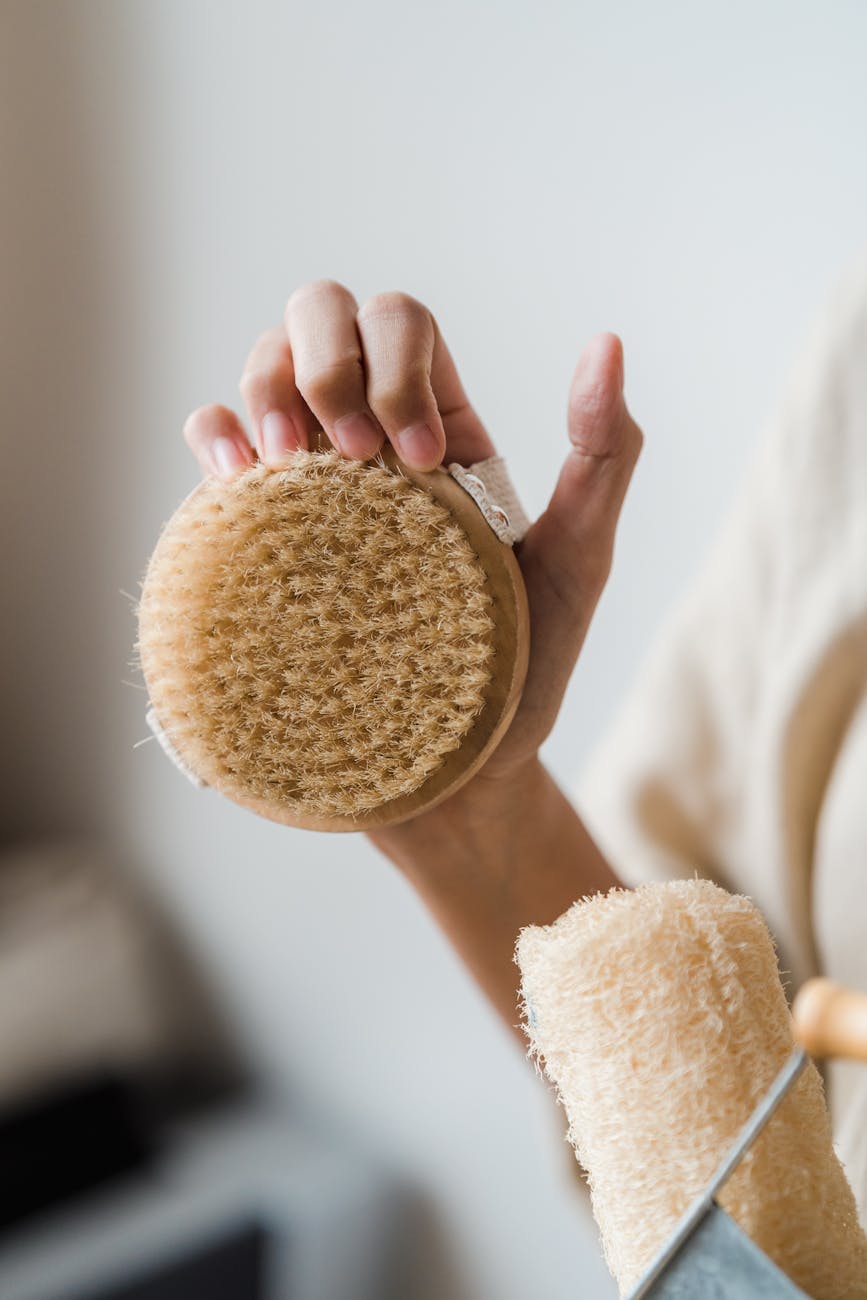
Okay, now onto the how-to of dry brushing!
Dry brushing needs to be done directly on your skin. This is one of the many reasons you’ll want to dry brush before you shower, you’ll already be disrobed.
- Start on your lower leg near your ankle. Make circular motions, using light to medium pressure up your leg towards your thigh. Do this on the front, back, and sides of your leg. Then switch and do the other leg the same way.
- Make small circular motions on your glutes and hips.
- Next make small circular motions working your way up your abdomen, sides, and lower back.
- Moving onto your arms, start near your wrist and make the same circular movements up towards your shoulder, making sure to hit the front, back, and sides of your arms.
- Get the upper back with the same brush and do the best you can.
- For your chest, neck, and face, use a smaller, softer brush. Make gentle circles in these areas making sure to exfoliate without irritating the skin.
Great job, you’ve done it! Now is a good time to hop in the shower to remove the flaky skin.
Q&A of Dry Brushing
Q: When is the best time to dry brush?
A: Typically the best time to dry brush is before you shower. This allows you to remove dead skin, sweat, oils, and debris before getting into the shower so your pores can be better cleaned.
Q: Should I wet my dry brush before using it?
A: No. The point of dry brushing is that it is dry. This allows the dry, dead skin cells to flake off rather than get messy and clog your pores while wet.
Q: Should I put oil on my skin before dry brushing?
A: No. Just like putting water isn’t necessary, neither is oil. Dry brushing should be done using a dry brush on dry skin. If you’d like to put a drop or two of essential oil on the brush before using it, you can, but it isn’t necessary.
Q: Should I put lotion on after I dry brush?
A: Yes. The ideal way to do this is dry brush, then shower, then put on body butter or lotion to rehydrate your skin.
This is about all the information you should need about dry brushing. If you have any questions that haven’t been answered here, feel free to drop them in the comments below and I’ll answer you as soon as I can.
 Wholeistically You